The players in my Castle Greyhawk campaign have spent most of the past 11
months (since 23 October 2021) romping about in the Astral Plane, and, at long last, they're likely
to return home to Oerth soon, I think. Our next session (last night, on 24 September 2022) will tell!
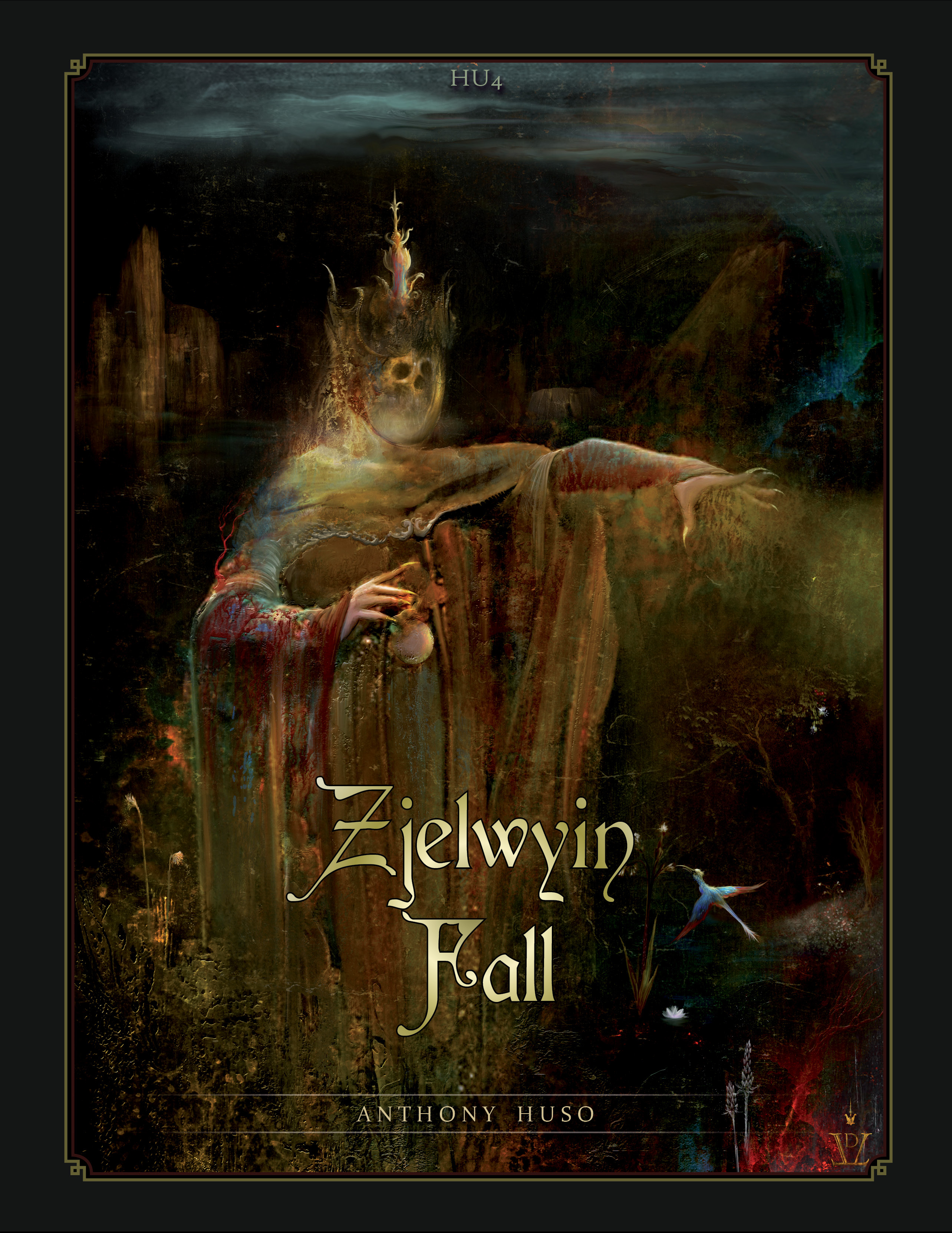
We have been playing through my (somewhat modified) version of
Anthony Huso's excellent
scenario,
Zjelwyin Fall
(also
available in PDF
if you prefer):
|
Zjelwyin Fall cover art
by Daniele Valeriani
|
As part of my work to deploy Anthony's adventure into my Greyhawk campaign,
I also used this as an opportunity to define some more of the
planar architecture
for the setting. Some of that design work went into adjusting the
framework and background for the scenario to suit my current campaign
situation, and some of it was general work expanding upon the options for
how the Astral Planet works in my games.
I'll delve into the campaign context after we wrap up the adventure in our
next session, so for now, I'll share some of the rules and design work that
I used to augment Anthony's scenario.
The Astral Plane in AD&D
The rules governing astral travel, astral encounters, and astral monsters
are (perhaps unsurprisingly) scattered across a variety of sources in 1st
edition AD&D. They appear in chronological order in:
-
Monster Manual (1977) - mostly in passing, not a lot of real
planar substance
-
Players Handbook (1978) - Astral Spell, Great Wheel planar
appendix, etc.
-
Dungeon Masters Guide (1979) - various notes, Appendix C p. 180
for one page of Astral and Ethereal wandering encounters, which notably
include both the Ether Cyclone (ethereal) and the Psychic Wind (astral)
-
Deities & Demigods (1980) - introduced some new monsters and additional rules
codifications, but still not a lot of real planar substance in here either
(which was a bummer to me in 1980, since this was the first AD&D
hardcover I waited for publication with bated breath!)
-
Fiend Folio (1981) - added some new monsters (most notably astral
searcher, berbalang, and githyanki), and also updated the DMG's Appendix C's Astral
& Ethereal Encounters on page 119
-
Dragon Magazine #67 (November 1982, just a few short months into
my first subscription!) - featured both Gygax's first "Deities &
Demigods of the World of Greyhawk" article, as well as Roger E. Moore's
"The Astral Plane" (with additions from Gary); this is the first real
treatment of worth for the Astral Plane, and the issue also included an
astral adventure, "Fedifensor" by Allen Rogers
-
Dragon Magazine #71 (March 1983) - included Moore's follow-up
Sage-Advice-like piece, "Solid Answers To Astral Questions"
-
Monster Manual II (1983) - added some new monsters, and also
compiled the relevant Astral monsters spanning the MM, FF, and MM2 (but
not D&DG, alas!) on page 155
-
Manual of the Planes (1987) - codified the Astral rules based on
the Dragon #67 article, didn't add much original material save some
expansion to random encounter options
To these, I add various sundry house rules and variants from:
-
Dragon Magazine, generally via early articles about the planes
(see the bibliography in my first
Gates article from Knockspell
for more specifics), and the new monsters introduced from the "Creature
Features" columns (inaugurated with Gygax's Mind Flayer in
Strategic Review #1), published adventures in Dragon, and
the "Creature Catalog" inserts, for which installments began to appear
with issue #89
-
Spelljammer (1989) - I've been fond of the idea of
plane-travelling ships via Roger Dean's artwork for the band Yes
(Fragile through Drama, in particular), Michael Moorcock's
Ship Which Sails over Land and Sea as well as the more-apt
misty-plane-and-time travelling Dark Ship helmed by the blind
captain from Sailor on the Seas of Fate; Spelljammer never quite
lived up to this potential, but I still use have a soft spot in my heart
for it and leverage some of its rules in my planar architecture and
mechanics (and the Neogi are reminiscent of Babylon 5's shadows, too,
which is not a bad thing....)
-
I was rather more fond of the 3e Manual of the Planes (2001)
than the 1e version (although you can't go wrong with Stephen Fabian
interior artwork from the 1e book!), and have probably lifted some ideas
from there as well
-
Pagan Publishing's astral rules in The Golden Dawn (1996;
for use in Call of Cthulhu), for which I was an early playtester
-
Sepulchrave II's "Tales of Wyre" stories from EnWorld (2002-2014; we can still hope for more!):
lots of inspiration here, but moreso for the Plane of Shadow (and the
Abyss!) than the Astral
-
While Anthony Huso's Zjelwyin Fall (2019) is grounded in the
1987 Manual of the Planes, Huso departs from MotP in various
ways as well
-
Trent Smith's
Heroic Legendarium
(May 2021) offers some very cool guidance on leveraging psychopomps
guiding
dead spirits en route to the Outer Planes, too
The Astral Plane, and AD&D's planar architecture as a whole, is a
far-from-codified system, and remains one of the largest gaps to fill
for an enterprising Dungeon Master.
Astral Encounters in AD&D
The DMG, D&DG, Dragon #67, MotP, Zjelwyin Fall, and Heroic Legendarium all offer a variety of interesting Astral
encounter options, and to some extent I leveraged them all for our Astral
sessions, as follows:
Encounter Checks Frequency
I checked for random encounters on two different schedules for the PCs'
Astral excursion:
-
Three fixed checks, at the adventure start, midpoint, and end @ 1 in 10
chance for an encounter for each check. If an encounter is
indicated, the type of encounter is checked in the
Astral Encounter Table 1 (see below), with the following
modifiers:
-
Beginning: standard chances
-
Midpoint: +05%
-
End: +10%
-
Three daily checks (every eight hours of Astral travel), with a 2 in
20 chance for an encounter: a roll of 1 indicates an standard
encounter, whereas a roll of 2 indicates an
encounter observed in passing (this will not resolve into an actual encounter
if the PCs do not interact, and showcases the grandeur and spectacle
of the Astral Plane as the metaphysical superhighway of AD&D's
multiverse).
Astral Encounter Table 1
I baselined this table using the Dragon #67 article and MotP, blending
the two. Roll d100, adjusting if necessary (for fixed checks):
-
01 - 75: Creature Encounter, roll d100 again below:
-
01 - 60: Outer planar creature (see Astral Monsters List)
-
61 - 75: Astral native creature (see Astral Monsters List)
-
76 - 90: Prime planar creature, roll d100 again below:
-
01 - 60: Prime characters
-
61 - 90: Prime creature with Astral sensory perception
-
91 - 99: Insane/catatonic Prime characters (sensory
deprivation to catatonia)
-
100: Insane/catatonic Prime creature with Astral sensory
perception
(sensory deprivation to catatonia)
-
91 - 100: Deity creature, roll d100 again below:
-
01 - 60: Working psychopomp deity on the job with
entourage
-
61 - 75: Travelling deity with 0-4 servants (roll
1d6-2)
-
76 - 85: Meeting between 2-5 divine envoys (roll 1d10:
1-4 = 2, 5-7 = 3, 8-9 = 4, 10 = 5)
-
86 - 95: Battle between 2 divine, infernal, etc. forces
-
96 - 99: Strangetiude gods (Yog-Sothoth, et al)
-
100: Super Special: Conjunction of the Million Spheres,
etc.
-
76 - 85: Color Pool
-
I have my own hues associated with the various gates and color pools
that access the Outer Planes, but this otherwise functions the same as
detailed in your source of choice
-
86 - 95: Astral Object, roll d100 again below:
-
01 - 60: Conduit/wormhole
-
61 - 65: Fixed Portal
-
66 - 80: Astral Permanent Planar Feature/Zone
-
81 - 84: Flying Missile (on its infinite course, surprises PCs
4 in 6!)
-
85 - 88: Elemental Pocket
-
89 - 92: Isle of Matter (roll 1d10: 1-4 = Prime Planar,
5-7 = Outer Planar, 8-9 = Alternate Prime, demi-planar, etc., 10 =
Ethereal)
-
93 - 96: Lair of Astral native creature
- 97 - 98: Corpse
-
99 - 100: Artifact (some object, not necessarily Baba Yaga's
Hut!)
-
96 - 100: Psychic Wind
Astral Monsters List
Anthony included a table of 20 wandering Astral encounters in Zjelwyin Fall, but I wanted to build out some tables to be a bit more comprehensive,
and to allow for a variety of additional encounter types to make the
Astral Plane come alive as the super-highway of AD&D's Great Wheel
cosmology.
To that end, I worked from the MM2 p 155 listing of Astral creatures
(which breaks them down by Frequency), then combed various additional
sources for monsters to broaden and deepen the list. For those
unfamiliar, AD&D 1e frequencies break down monsters as follows:
Common at 65%, Uncommon at 20%, Rare at 11%, and Very Rare at 4%.
The frequencies listed below do not necessarily match the standard frequency rating for each creature, since they reflect my sense of how frequently they are encountered in the Astral Plane vs. the Prime. * indicates that the creature's sensory perception extends into the Astral plane.
Common Astral Monsters (65%; roll 1d12)
1. Cerebral Parasite
2. Daemon, Minor
3. Demon, Lesser
4. Deva, Astral
5. Devil, Minor
6. Githyanki
7. Human Traveller
8. Invisible Stalker
9. Night Hag
10. Nightmare
11. Slaad: red, blue, or green
Uncommon Astral Monsters (20%; roll 1d24)
1. Aerial Servant
2. Astral Wolf (D&DG, Nehwon Mythos, p. 97)
3. Agathion
4. Baku
5. Basilisk*
6. Cockatrice*
7. Couatl
8. Devourer (D&DG, Nehwon Mythos, p. 98)
9. Diakk
10. Dracolisk*
11. Githyanki (appears in both lists, not an error)
12. Gorgon*
13. Lich
14. Medusa (roll 1d8: 1-5 = AD&D, 6-7 = Greek, 8 = Arimoi)*
15. Mi-Go (D&DG, Cthulhu Mythos, p. 46; Zjelwyin Fall details a variant as well)
16. Pyrolisk*
17. Rakshasa (roll 1d8: 1-5 = MM, 6-7 = Knight, 8 = Noble; see Scott Bennie's article in Dragon #84)
18. Shedu
19. Star Leviathan (see Creature Catalog in Dragon #89)
20. Titan (roll 1d12: 1-5 = Lesser, 6-9 = Major, 10-11 = Elder , 12 = Greek)
21. Void Shark (Monsters of Myth, Steve Marsh section; also in my Canonfire! Postfest 18 article)
Rare Astral Monsters (11%; roll 1d30)
1. Basilisk, Greater*
2. Berbalang
3. Byakhee (D&DG, Cthulhu Mythos, p. 44)
4. Daemon, Greater
5. Demon, Major
6. Devil, Major
7. Dragon, Astral (see Dragon #134)
8. Foo Dog
9. Gigante
10. Githzerai (70% hunting githyanki, or 30% in-transit to Limbo)
11. Gorgimera*
12. Great Race of Yith (D&DG, Cthulhu Mythos, p. 45)
13. Ihagnim (see Creature Collection in Dragon #89)
14. Hollyphant
15. Intellect Devourer
16. Ki-rin
17. Lillend (see Creature Catalog II in Dragon #94)
18. Modron, Hierarch
19. Moon Dog
20. Mynakh (Monsters of Myth)
21. Nightgaunt (Call of Cthulhu)
22. Phoenix
23. Planetar
24. Slaad: grey or death
25. Thelndari (see Creature Catalog III in Dragon #101 and my updates)
26. Wind Steed (see Creature Collection in Dragon #89)
Very Rare Astral Monsters (4%, roll 1d30)
1. Astral Searcher
2. Avari (see Creature Catalog III in Dragon #101)
3. Catlord (or, alternately, other animal masters from Melnibonéan Mythos)
4. Daemon, Master
5. Demon, Prince or Lord
6. Demi-lich*
7. Devil, Duke or Arch-
8. Dragon, Unique: Tiamat (my version), Bahamut, Sariador, or other
9. Dragonhorse
10. Foo Lion
11. Hound of the Underworld (Monsters of Myth)
12. Kelmain (D&DG, Melnibonéan Mythos, p. 90)
13. Kheph (Monsters of Myth)
14. Magnesium Spirit
15.Night Vapour (Monsters of Myth)
16. Oonai (D&DG, Melnibonéan Mythos, p. 93)
17. Opinicus
18. Primordial One (D&DG, Cthulhu Mythos, p. 46)
19. Pudding, Alien (Monsters of Myth)
20. Retriever
21. Shedu, Greater
22. Sheelba of the Eyeless Face or Ningauble of the Seven Eyes (D&DG, Nehwon Mythos, p. 101, 102)
23. Slaad: Lord
24. Solar
25. Tsung Pathet (Monsters of Myth, Steve Marsh section)
26. Ulyuleng (Monsters of Myth)
27. Utukku (see Creature Collection in Dragon #89)
28. Vampire
Sample Astral Encounters
While travelling through Astral space, my players' PCs encountered the following:
- Day 6: Astral wolves, which the PCs outdistanced (although the wolves trailed them for several days, they eventually sought slower prey)
- Day 9: a huge Kelmain host of 6,628 slain warriors en route to Limbo; the PCs watched it pass by for a few hours, and it faded into the distance
- Day 13: 102 high elven spirits being guided to Valinor by Eärendil, bearing a silmaril upon his brow and sailing the Astral upon The Vingilot; after a very positive reaction roll (it really helps to travel with bards and paladins!), he provided the Blessings of the Valar to the PCs, and also gave them a lift, shortening their journey by 1/3
- Day 25: Intelligent, psionic yellow mold (that's no mold, it's an asteroid....), which the PCs battled, but ultimately fled
- Day 27 had two encounters!; the first could have been avoided, but the PCs engaged with the titan:
- a major Greek titan en route to Tarterus, whom the PCs also received a friendly reaction roll from due to a potion of growth having been consumed during the mold battle (making their MU 24' tall)
- an astral deva, who provided the PCs with a potion of extra-healing (3 doses), and warned them of getting involved in the affairs of Shodreth Drachod, calling him "the gringling lich" (which unsettled the PCs mightily!)
- Day 28: the PCs saw what seemed to be a raven in passing (but was in fact a shape-changed imp), but they did not engage it
- Day 32: their phylacteries brought the PCs to Zjelwyin Fall, and the adventure began in earnest!
House Rulings in the Astral
During the course of play, various rulings were made that addressed gaps in how the Astral Plane works in AD&D:
- Time does not pass in the Astral, therefore spells with durations and potions are permanent so long as the PCs remain in the Astral Plane
- Because time does not pass, PCs do not bleed out if brought to 0 or fewer hit points; similarly, they neither enter a coma nor lose memorized spells while below 0 hit points, since no time passes
- Clerics of Celestian are able to recover spells once per day, as if the PCs were still in Greyhawk, because Celestian's home plane is the Astral
- Unseen Servant is a bit more versatile than I'd originally thought (and I already think it's the best first level spell in the books): because Gary states that an unseen servant can "clean and mend" (mending being a pretty complex task), I allowed it to bind the wounds of an unconcious PC
There may be some other that I'm forgetting, but if so I'm sure my players will remind me and I'll update further.
New Magic-User Spell
I created this spell as a help for the PCs and placed it within Zjelwyin Fall, but they didn't find it---c'est la vie!
Oshon Yanthû's Temporal and Material Encapsulation (Evocation—Conjuration, Alteration)
Level: 3 Magic-User (Savant 2?), (Cleric of Celestian 4)
Range: 0 or touch
Duration: Special
Area of Effect: Up to 1” radius/3 levels of caster OR 1 person + 1 per 4 levels of caster
Components: V, S, M
Casting Time: 6 Segments Magic-User or Savant, 8 segments Cleric
Save: None
Description: Oshon Yanthû's Temporal and Material Encapsulation creates a bubble of native space-time normality within the Astral Plane, which allows designated spell casters within the area of effect to reset and regain spells via prayer and/or memorization. Given that the passage of time is essentially meaningless in Astral space, the duration of the spell completes when all designated casters have completed their memorization activities.
Oshon Yanthû's Temporal and Material Encapsulation will affect creatures travelling in the Astral Plane via silver cord (c.f., Astral Spell), or creatures travelling with their physical bodies (via gate, psionic Probability Travel, etc.), but not both. The caster’s own Astral travel method determines which other casters may benefit from the spell. In neither case does the spell enable contact with or access to deities or their agents, or to other planes otherwise normally inaccessible from the Astral.
Notes:
- Oshon Yanthû's Temporal and Material Encapsulation carries some risk for all Astral spell casters:
- For silver-corded casters, the spell risks snapping their silver cord, calculated at 1% x the highest-level spell memorized (no risk/effect upon any non-spell-casters designated within the area of effect).
- For
physical Astral travelers, the spell subjects them to the passage of
time at normal memorization rates (see DMG page 40), including both time
for sleep/rest, and prayer/memorization time. So, they get hungry,
tired, etc. as time passes.
- If cast while upon the Prime Material Plane instead of the Astral Plane, then Oshon Yanthû's Temporal and Material Encapsulation suppresses the effects of time-related spells and effects within its area of effect, including haste, slow, aging (by spell-casting or ghost touch, etc.), staff of withering, potion of speed, etc.
The material component is a ribbon of the finest, stiffened black silk, inscribed with mercurial or platinum ink; it must be one foot long per level of the caster, at a cost of 50gp per foot. Twisted into a Möbius strip, it is consumed during the casting. For clerics of Celestian, their holy symbol (a black circle with seven stars) is also required, but neither the holy symbol nor the ribbon is consumed in the casting.
Modifications to Zjelwyin Fall for grodog's Greyhawk
Here's a distillation of my discussion on Anthony Huso's boards about my Greyhawk modifications to his adventure.
12 September 2021: My Castle Greyhawk PCs were overdue, in one or two cases, to hit level four, so it's now or never, and I seeded the entry into Zjelwyin Fall in last night's session. I have to figure out exactly how my background changes require me to rework the module (if at all), since the PCs will be acting as agents of the local clergy of Celestian and not looting the tomb, but instead retrieving an item stored there previously by mutual arrangement.
I haven't decided if they'll be charged to either
- snag the item (a scroll or book of prophecy or something related) directly, or
- wake the lich to donate two objects to him in order to remove their desired object, or
- both (with #1 being the plan, and #2 the backup in case they awaken him or he is already awake)
They may also be protecting a pair of nubile twin acolytes (modelled off of the classic Virgin Records logos at https://rarerecordcollector.files.wordpress.com/2010/04/v-2012-kevin-coyne.png), but I haven't decided if keeping them alive may be too challenging or not....
I think that Shodreth Drachod (I added the "r" to the surname) has this working relationship with Celestian and his clergy, where Celestian helped to fashion and sustain Zjelwyin Fall and in return the lich helps to guard and secure items that he and his clergy wish to remain highly-secure.
23 October 2021: I'm doing 3 checks per day (every 8 hours = 3/day vs. every 4 = 6/day), with the total duration of the trip being [(2d20+4)x4 days] / 2 (due to the phylacteries, which they're wearing on their heads like diadem headbands, and which shoot out hot pink/ruby searchlight lasers to track and home in on ZF)
1 September 2022: I'm thinking that Drachod (I added the extra 'r' in my version of his name) may offer help to the PCs out of desire for self-preservation (aka, the goodness of his heart ;) )---if their reaction rolls are good. He acts as a custodian for prophetic lore from the clergy of Celestian, and in return Celestian helped to build ZF and still maintains it on Drachod's behalf. So he has a vested self-interest to ensure that Celestian continues to invest that daily Primal flux into ZF.
So the PCs will retrieve the prophecy previously-deposited* in ages past. That they're pulling this particular prophecy (the sestina I emailed you) will pique his concern and curiosity, in particular if he notices one of the PCs carrying the lesser tentacle rod. (In fact, he'll be far-more concerned about evidence that the drow attempted to infiltrate ZF and will immediately connect them to the prophecy, although he won't share that detail with the PCs, or Celestian). Hence the help. If he notices that, he may also geas the PCs to deliver a message to the Master at the NWI (which would be a handy way to introduce that into the game), or perhaps to Tenser, Iggwilv, or someone comparable (I haven't decided yet---he may just keep the info to himself, for the moment, too).
* The PCs don't know this yet, but they're not just bringing back a scroll with the prophecy on it. To retrieve the prophecy requires a virgin twin acolyte, and Drachod will kiss her to transfer it (sort of a cross between the Quickening from Highlander and the kiss of the angel Simon from The Prophecy). Drachod himself is the storage device. To deposit the prophecy into him (which the PCs are not doing) is a bit more intimate.... The twins are critical to the process: the prophecy, while it is deposited into one of them, infects both: so the twin who remains on the Prime also acts as a receiver for the prophecy, and gains access to it at the same time that the other twin in the Astral receives it from Drachod. This ensures data availability for the priesthood in case the first twin doesn't successfully return home. (The NPC twins naturally know nothing of this either).
I also rewrote Drachod's poem at the pull-ring, recast with seven lines, each with one through seven syllables:
No mercy exists
before me
Open this door
to vanish forever
from Shodreth Drachod: Gringling
King
am I
I hope that these will prove useful in your games. Enjoy!
Allan.