08 November 2019

The Starless Sea---Campaign Structures vs. Adventure Structures

How much thought have we collectively given to game elements/structures that are part of a campaign's flow and evolution, independent of the structure of the individual adventures that make it up? 

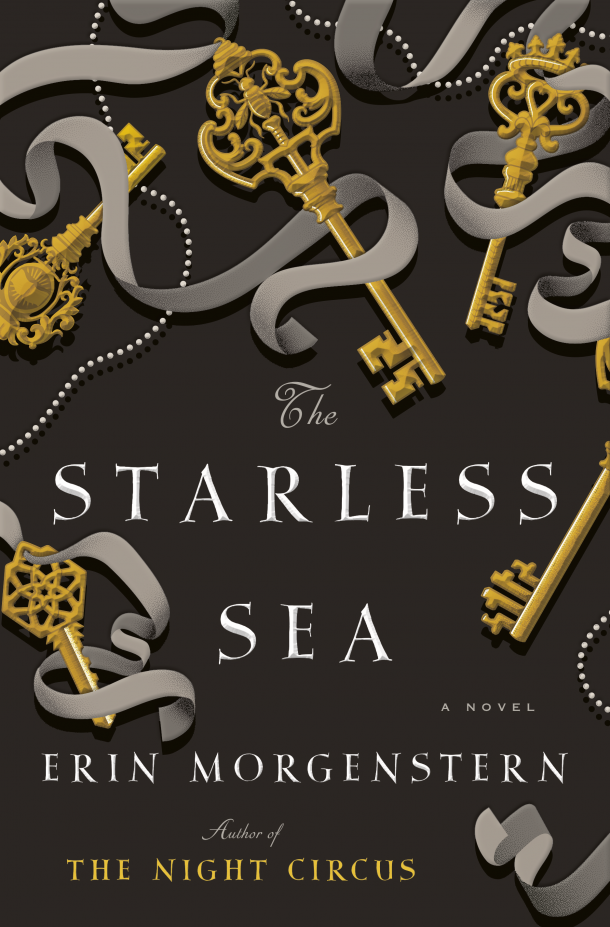
The Starless Sea by Erin Morgenstern


I've been reading Erin Morgenstern's new book _The Starless Sea_, which is a fairy-tale-like novel told through nested stories like the 1001 Arabian Nights; the book explores the stories' structures, some of which are meta-fictionally self-reflective/-reflexive, a la Borges or Robert Coover.  It's a bit like a mega-dungeon of a book, really.

So, it got me thinking about elements and structures that drive campaigns over the medium- to long haul, like:

  • active foreshadowing through backgound/history/sage advice, spies/spying, divination and research spells, prophecies and divine/infernal guidance, etc.
  • hidden foreshadowing through returning to earlier locations/NPCs/items/prophecies/etc. that have a newly-realized meaning or significance in retrospect after learning D after A, B, and C ("we should never have sold that wand at 3rd level so we could pay our training costs---it's the X"; "whoa!:  we need to head back to that well in level 6 and open that unopenable door with this key now"; etc.); this works best, of course, when specific items, content, histories, etc. have layers of additional meaning/mystery to them to be found
  • assembling pieces and parts of multi-part magic items (Rod of Seven Parts, Eye and Hand of Vecna, etc.), maps, information/lore, paintings, etc.; Anthony Huso's Black Journal falls into this category, I think, in addition to being an awesome prop
  • red herrings, false trails/false alarms, and misinterpretations:  player agency means that they'll get distracted by the fake ghost's tricks rather than unmasking the fake ghost, sometimes; this is possible through their own misinterpretations, as well as through being distracted by false trails/fake news clues intentionally created by NPCs---I'm thinking of  Urgaan of Angarngi's map from Leiber's "Jewels in the Forest" here, or Eclavdra's false trail luring the classic GDQ players to assault Lolth as the root of all of their woes.
  • independent actors with their own agendas that drive their goals, priorities, relationships, etc.---this is the whole "putting it all in motion" to create verisimilitude
What other kinds of tools like these do we use to structure long-term campaign play?

In response to that original question, Anthony Huso offered several comments, and suggested a pair of additions to my list above:
  • an actual calendar with slow-moving but time-critical plot points
  • real consequences to player choices
and to which I replied:
Great points, Anthony!  I definitely use the Greyhawk calendar---my favorite version is the one created by Clay Luther, since it's a great tracking calendar---and I find that Greyhawk's alternative dating systems (along with my own in Mendenein) are very useful in-game to help ground the players (and their PCs) in Greyhawk's history.

I finished reading _The Starless Sea_ last night, which got me thinking further about the pacing of stories and their endings, and about their differences in application to campaigns and to games vs. to literature.  Foreshadowing is a literary technique, and not all literary tropes and techniques will be as applicably useful in an RPG.  In addition, stories have endings, but RPG campaigns don't necessarily have endings (although they do have a natural rising/falling pacing of action in play).  So what techniques and tropes (and other tools) exist uniquely in RPG campaigns that aren't literary in nature, and how do they impact the structure of campaign play?
That's an open question that I don't have a definite answer to, but here are a few mulled thoughts.
 

There's a lot of overlap in literary and cinematic techniques with RPGs, but I think that's in part due to the still-nascent nature of RPGs as a form of play, art, and creative expression: we know drama, literature, and movies since they've been around longer, so we naturally incorporate the terminology, structures, and tools from those genres into RPGs; Justin Alexander has written several sets of posts on his blog The Alexandrian about dramatic and cinematic structures in RPGs, for example. But RPGs are distinct from these forms, on several key fronts:

  • RPGs are creative ensembles, not performing ensembles (Critical Role, et al, aside): the players and the DM build the campaign together, one encounter, one adventure at a time, and it is through their interplay that the campaign flourishes
  • the DM is not the author: this follows logically from the previous point, but it's worth being explicit about it, I think; the DM doesn't own the story of the campaign---the DM is more like the director of an orchestra, since without the other players' PC activities as participation in the game, the DM's actions are silently meaningless (the DM's behind-the-scenes design work is far from meaningless, but you get my point still, I hope; note to self: ponder the DM as architect vs. director)
  • RPGs are games, so their primary motivation is to entertain and to have fun, and that "fun" piece colors the RPG genre distinctly from drama, literature, and movies---which set out to entertain, but are not in and of themselves expected to "be fun" in the way that games are
  • As long-term games, RPGs are expected to have "replay value"---that secret sauce which keeps players returning to the table week after week, year after year, to explore the game that they're building together. One-shots, asides, and classic reruns (playing modules from our youth?) are certainly part of the pacing model of the campaign, but without that continuous draw to re-engage, a campaign will probably stagnate (this is probably one of the best reasons to have a stable of recurring villains as an organization vs. single-figures---if the PCs are pitted against The Cult of Vecna, even when they take out the EHP at some point, there are still other foes standing who need to be dealt with)
  • RPGs are games with systems, so random events can and do significantly impact the play of the game and the outcomes of actions in the campaign, within the scope of the systems used. When the key villain rolls a 1 on a saving throw and is charmed, or disintegrated, or plane shifted away to the Seven Heavens---or whatever!---that's probably not a result that the players (and their PCs) or the DM (and the NPCs, monsters, etc.) have necessarily prepared for. So the nature of random results inject random outcomes into gameplay which the players and the DM have to run with, respond to, and manage as complication during each and every session.

The flow and pace of these many random events play out in retrospect as the sense-making stories that we tell ourselves to summarize the encounters, interactions, combats, and explorations of adventures in the context of the campaign, but that's still a literary layer thrown over and summarizing the action of the gameplay. 


What more falls into this bucket?

Please share your thoughts, analyses, speculations, ideas, and inspirations in the comments!

Allan.


P.S.  There's also something in the zone here worth considering on processes vs. outcomes. See https://seths.blog/2019/11/the-process-vs-the-outcome/ for a kick-off point, but an RPG needs to be fun in the process of playing it, which will reinforce the longer-term replay value ideas above. Milestones and outcomes are important too, in particular for longer-term campaign play; not just the in-the-moment process of playing. So this starts to get into sub-processes building into processes into workflows of processes into complex systems of processes*---which is why system selection is an important factor in campaign viability: if the system for your game is designed to product disposable one-year-long campaigns, as the 3.x and later editions of D&D are, then you shouldn't be surprised that the game design doesn't scale to support epic-level play over three or more years.


ATGj

*I'm also not jumping down the rabbit hole of Rob Kuntz's "open forms" book concept yet, but that is a quite possibly an ending point for this analysis, I suppose.

25 October 2019

grodog talking 1e Dragons and Greyhawk on Twitch Sunday night @ 7:30pm EDT

Just a quick announcement:   I'll return to talk Greyhawk and dragons on Twitch again this weekend, with Jay Scott and Anna Meyer, on Sunday, Oct 27, 7:30PM EDT, livestreaming at https://www.twitch.tv/lordgosumba

Here's Jay's full announcement:
Sunday evening, we continue our discussion on everyone's favorite D&D monster, Dragons, with Gabbin' at Lord Peak's Haven #68 - Dragons of the Flanaess, Part 2. We will discuss specific Dragons from Greyhawk Canon and Lore, and from the participant's Campaigns. My guest hosts this week will be Anna Meyer and Allan T. Grohe Jr.! This should be a fantastic finish to our two week chat on this topic! We begin Sun, Oct 27, 7:30PM EDT. Thank you so very much for the wonderful support, and I hope to see you Live Stream! www.twitch.tv/lordgosumba

 
 Talk to you then! :D

Allan.

17 October 2019

grodog's Events at TsunamiCon 2019: Greyhawk AD&D and Aliens: This Time It's War

http://www.tsunamicon.org/


At the 11th hour this week, I decided to submit events to run at Wichita's TsunamiCon, our sixth annual gaming convention.  Details on the events appear in my post to the TsunamiCon Facebook group, but I figured I'd share the details here as well:

The events are listed at TableTop.Events, and here are the details:
  • Introduction to World of Greyhawk and AD&D 1st editionCreate new characters for AD&D 1e, learn the basics of play, and explore grodog's infamous version of Castle Greyhawk. Players new to Greyhawk or AD&D 1st edition welcome! Bring your graph paper, dice, and a healthy dose of paranoid courage! 1e character sheets will be provided. Prizes awarded!
    • This will run on Saturday from 1-5pm, and 7-11pm.
 
  • Aliens: This Time It's War!:  Celebrating 40 years of Alien, this is "The Reactor" level from the classic 1989 miniatures skirmish game. Players control Colonial Marines trying to escape the alien nest that has awoken around them! Fast-paced and very deadly, rules will be taught. In space, no one can hear you scream!
    • This will run on Sunday from 9am-Noon, and 1pm-4pm.

I've been discussing the kickoff of a new multi-group Greyhawk campaign in Wichita for the past couple of months, and hopefully this will provide a good opportunity to introduce Greyhawk and AD&D to new and interested players!  If you're local and interested, the main discussion is in our local Wichita D&D group in Facebook.

Allan.

14 October 2019

What types of product designs does the OSR lack?

I don't find weird 'edgy' stuff much use, and I'm not currently in the market for Venger-style sleaze or Pundit's historicism; fairly meat & potatoes stuff with a typical OD&D/Greyhawk vibe rather than B/X - so more demons & snake cults, fewer BX standard monsters like giants, probably preferable. The heavy OSR emphasis on BX type material leaves a bit of a gap for the former.
I haven't given a ton of thought to the B/X and/or SW focus in the OSR creating a content gap, but that makes sense. We've discussed these concepts a little bit before at the Knights & Knaves Alehouse:
but not necessarily with an emphasis on what's not out there, content-wise. 
 
OSR-content-gaps analysis probably requires a broader understanding of Kickstarter and other crowd-funding platforms, as well as DriveThruRPG pdf offerings, than I've got these days. The continual need for "good vanilla fantasy" content that Melan has mentioned in his blogs, zines, and adventures (see https://beyondfomalhaut.blogspot.com/search?q=%22vanilla+fantasy%22 for some good examples), and Bryce's focus on highly-usable adventures that don't suck are good touchstones for tone and quality, but don't really touch on the content gaps for the types of books that aren't being written and published.
 
In my head, these are the main types of content for RPGs that exist, regardless of game system, setting, edition, etc.:
  • Core rulebooks: the holy trinity: PHB, DMG, MM; OSRIC rule book; etc.; these could be books or boxed sets, but define the DM's minimum investment required to play the game
  • Supplemental rule books---these build out the rules further in terms of expanding upon the original footprint of the rules with new types of rules/content like in D&DG, MotP, DSG/WSG, et al, as well as expanding the amount of material within the original footprint of the rules as the setting books like UA, OA, GA, FRA, etc. do, and as new monster books do in FF and MM2, Monsters of Myth, Malevolent & Benign 1 & 2, Dwellers in Dark Places, etc., which also obviously fall into this category, as do magazines since they generally focus on supplemental rules (or adventures); books like WotC's Primal Order series, Bard Games' Compleat Alchemist/etc. all fall into this category, as does Trent Foster's AD&D Companion
  • Adventure modules: modular modules, either stand-alone or in a series (which tend to be bigger and get complied or published as super modules: GDQ1-7, A1-4, Guy Fullerton's F1-4, Jeff Talansian's ASSH modules, etc.); many modules often introduce new supplemental rules material as well with new monsters, magic items, spells, classes (although less frequently), etc.; WG6's new to hit tables and attrition rules fall into this category too (since they're not really extensive enough to warrant calling their inclusion in the module as a supplement too, in my mind)
  • Adventure supplements: modules that are also supplements; S4 Lost Caverns of Tsojcanth is the best example of this content type since its Book 2 was a mini-MM2/UA rolled in with the main 32 page module, but others definitely exist too, including ones where the new rules are required to play the adventure (which is not the case with S4): Q1 (with its myriad of rules for planar travel in the Abyss), B1-2 (with their guidance on how to run and play adventures, although one could argue that this content belongs in the core rule books), and S3 (with it's Gamma World-like technology usage charts); more-recently, Anthony Huso's Zjelwyin Fall fits this category with its Astral rules and codifications
  • Setting Books: these book obviously detail setting-specific content a la the World of Greyhawk, Blackmoor, Tekumel, et al, which can include sourcebook material about gods, spells, races, classes, etc., in addition to the usual geography, history, languages, runes, clothing, culture, and such
  • Content Tools: these tools aid a DM (or perhaps a player but I mostly think of these are DM/referee aids), so this is a much more narrow label in my head than most folks probably think of accessories, and includes books like Monster & Treasure Assortments, Dungeon Geomorphs, and Rogues Gallery, as well as books of tables like Dungeon Dozen, Tome of Adventure Design, the d20 era Ultimate Toolbox, much of Kellri's CDD netbooks, with Gabor's recent Nocturnal Table being a recent example. Midkemia Press' Cities also lands into this category, although most of their other city books would be adventures or supplements. On the player tools front, the only example that really jumps out to me is for CoC, with the S. Peterson's Guides to Creatures and Creatures of the Dreamlands books; but while written as field guides for players to use for their characters to ID Mythos horrors, in practice I always used the books as referee to show players a picture of the creature that their characters were confronting....
  • Accessories: character sheets/adventure logs, DM Log/campaign mgmt tools, JG's Ready Reference Sheets, DM Screen (low content unless there's an adventure or set of reference sheets with it), as well as graph/hex paper, miniatures, and dice---although Inkwell's dungeonmorphs dice and Flying Buffalo's Adventure Dice certainly provide some content; I suppose books of maps without keys/adventure content for them would fall more into this category vs. content tools too
  • Guidance Books: this one's a bit fishy to me, but I think that there's a category for books about how to play in general, how to play in a certain style/setting/tone/edition, best practices in adventure design, etc.; my still-unpublished dungeon design essays book will fall into this category, as does EGG's Role-Playing Mastery and Master of the Game books, and perhaps his Gygaxian Worlds series; this category would not include gaming history books like Playing at the World or Designers & Dungeons or general summary/catalog books like Heroic World or JEH's Fantasy Role Playing Games, since those don't usually impact how you play the game at the table; magazines sometimes focus on this kind of content in their articles, too
So, given all of that, are there any additional content types that OSR-minded folks would want to see that's not already in the list?

My sense is that the OSR largely focuses on core rules these days, with supplemental rules and adventures being the next categories that see the most content focus (although if you look at the number of dice, cards, and miniatures Kickstarters it's entirely possible that Accessories are the tail that wags the OSR dog, perhaps?). At the Knights & Knaves Alehouse I think we lament the lack of focus on good adventures (which is a tone/quality issue rather than a volume issue), and also see a lack of content tools as a critical gap that drives down the supportability of AD&D/OSRIC as a platform. 
 
I'm definitely curious to hear others perceptions on this!

Some additional discussion on Knights & Knaves Alehouse at https://knights-n-knaves.com/phpbb3/viewtopic.php?f=3&t=16157, and on reddit at https://www.reddit.com/r/osr/comments/dcdlu1/what_types_of_products_does_the_osr_lack/, and on Twitter at https://twitter.com/AllanGrohe/status/1183766019090845696
 
Allan.

29 September 2019

grodog talking Iggwilv in Greyhawk on caslTawk @ Monday night 8pm EDT

I think that this Twitch.TV/live-streaming thing may be starting to click for me, but you'll have another opportunity to judge for yourself, since carlos "casl Entertainment" lising has invited me to join him and his Patreon sponsors in their October discussion tomorrow night:


caslTawk announcement, with classic Greyhawk styling!
caslTawk announcement,
with classic Greyhawk styling!


Tune into our Twitch channel for a chat between carlos "The Rook" lising and Greyhawk scholar Allan T. Grohe Jr., who will be discussing the casl Entertainment Patreon topic for the month of October: Demons and the Witch-Queen, Iggwilv!

Monday, September 30, 2019 at 8 PM – 9 PM EDT on    www.twitch.tv/caslentertainment


I don't know exactly what Carlos and his crew of patrons will dig into for the agenda, but I'm sure it will be a fun discussion---what could possibly go wrong, when you start to mix up Iggwilv, demons, and the World of Greyhawk? ;)

Edit:  the replay can be watched on YouTube at https://www.youtube.com/watch?v=CuZ3eOSrabE&feature=youtu.be:


Allan.

23 September 2019

Happy 64th Birthday to Rob Kuntz!

Happiest of birthday wishes to Robert J. Kuntz as he embarks into his 64th annum, in the best company possible---his wife Nathalie Hachet:


Rob Kuntz and Nathalie Hachet


From Rob's biography in The Strategic Review #5 (December 1975):


Strategic Review #5 (December 1975)


Robert J. Kuntz
I was born September 23rd 1955 in Lake Geneva and have lived here all my life. As a kid I played the game that everybody played on our block: “Bang! You’re Dead!”, though it did vary at times. I learned about Wargames in a peculiar way. As I sat skimming through an issue of Playboy one day when I was barely thirteen years old, I came upon a game section describing all varieties of party gifts to give to your family or friends for Christmas. I saw a “Dogfight” game listed among the buyables and immediately proceeded to the nearest dimestore with hopes high. I was disappointed when the assistant manager informed me that they did not carry the game and was about to leave when he suggested that I come over to his place and try some games he had. He named a few off; “Stalingrad”, etc., and I was on my way . . . . In my seven and one-half years of participation in the wargames field I have enjoyed boardgames, miniatures and play-by-mail types and am now employed with a company that produces games and of which my best friend is the head thereof. I intend to write many more rules sets before I pass away and I have this spectre friend of mine who can give the inside on this good “ghost-writer...” 


While a lot has changed in Rob's life since I've known him, he remains the quintessential, creative Dungeon Master, and may his dice continue to roll for many more years to come!:

Rob Kuntz DMing at GaryCon 

Allan.

LordGosumba Twitch.TV DM Roundtable Replay from 22 September 2019

I should have been more proactive about posting the DM Rountable I was invited to last night on Jay "Lord Gosumba" Scott's Twitch.TV live stream, but with everything else going on I forgot to blog about it beforehand:


LordGosumba DMs Roundtable - 22 September 2019
LordGosumba DMs Roundtable -
22 September 2019


In case you're curious, on Sunday, 22 September 2019 I'll be live on Jay Scott's LordGosumba TwitchTV channel, in a DMs Roundtable discussion focusing on Greyhawk and AD&D 1st edition:

==
Hello Friends and Greyhawkers! On this weeks Gabbin at Lord Peak's Haven #63 - DMs Roundtable Discussion, we will have some well known names in the Greyhawk and Streaming Communities taking part!

Scheduled to participate in our 4th Roundtable Discussion, are Allan T. Grohe Jr., Carlos Lising, Anna Meyer, William Henry Dvorak, James Duffie, and Ann (Sydwe) from Knightheartgaming. We will hope to bring some experience and insight into questions you may wish to ask, and we welcome viewer input and comments!

We begin this very intriguing conversation this Sunday, Sept. 22nd, 7:30PM EDT. See you in the Live Stream https://www.twitch.tv/lordgosumba

The replay can be watched at https://www.twitch.tv/videos/485181123 and we covered some fun and interesting (and in a few cases, somewhat unexpected!) topics, including:


  • Our favorite DMs?
  • Our favorite adventures?
  • Our favorite recurring in-game enemies?
  • Our saddest in-game moments?
  • How has DMing helped our jobs/lives?
  • Our thoughts on consent in gaming groups/sessions?
  • Who would we most want as a player at our tables and/or to play with---both historical and living?
  • How do we manage improvisation?
  • What's our favorite game other than D&D to run?
  • What do we think about Critical Role?
  • What are our plans/hopes for the future?

Jay also interviewed me on his show last month, and you can watch the replay for that at https://www.twitch.tv/videos/469154701 if you're interested:


grodog interview - 17 August 2019
grodog interview -
17 August 2019

I'm sure I'll get more used to the streaming process and format, at some point, and I welcome any feedback and suggestions on how to better leverage the medium/format.

Allan.

19 September 2019

Saving Throw OSRIC fundraiser zine News and Updates - #3 on DriveThruRPG Best Sellers!

Saving Throw zine - Introduction and Table of Contents
Saving Throw - Introduction
and Table of Contents


Some news and updates on Saving Throw since its launch on Sunday:
  1. Thank you for your generous support of this project!---Saving Throw has been as high as #3 on the DriveThruRPG.com best sellers list this week, outpacing both Eclipse Phase 2nd Edition and Legend of the Five Rings
    Tuesday 17 September 2019 - Saving Throw is the #3 Best Seller!
    Tuesday 17 September 2019 -
    Saving Throw is the #3 Best Seller!

    That wouldn't have been possible without your support!

  2. Please continue to spread the word---Saving Throw isn't even a week old yet, so many old-school gamers won't be aware of it:  mention it in your gaming groups, your local game stores, and in your social media channels! 

    Your primary link should be back to the DriveThru project page at https://www.drivethrurpg.com/product/288750/Saving-Throw-fundraiser-fanzine-for-James-D-Kramer
  3. Positive reviews are starting to come in:

    Bryce "tenfootpole.org" Lynch's review is at https://tenfootpole.org/ironspike/?p=6236 and states:
    • "Jim Kramer is the guy behind Usherwood Publishing. Several of his adventures appear on my Best & Regerts list, including Arachnaphobia and most his Bone Hilt campaign series."
    • "You should go pick this up because you’re not an asshole. And, also, because the adventures are quite good. Also, there’s a lot of OTHER content in it, beyond the adventures."

    The DriveThru page now notes two five-star ratings thus far, and user Guggy Z also commented as a verified purchaser:  "What a great zine! Just skimming I think the hours of solid play to page count ratio looks immense, and I appreciate the chance to support a good cause. This stuff is going right to my table ASAP!"

  4. The print edition is getting closer to reality, per updates from Guy Fullerton:
    • 18 September:  On the bright side, the premium color hardcover masters got approved (this doesn't mean they'll look right), so I ordered a proof. Last time I ordered something, it took about a week to arrive. Fingers crossed.

      I may end up putting a variety of print options together, since drivethru makes that easy enough to do. A perfect bound book might suck format-wise, but it's cheaper to produce. I still plan on making a pair of staple-bound books available, one each with the first & last halves of the content, respectively, with the title page and OGL page in both; that's probably the cheapest option for lay-flat.
    • 15 September:  I submitted a cover & (non-final) interior to drivethru for a hardcover version. It takes a couple days for their validation process to determine whether there are any glitches. I will order a proof of the hardcover as soon as they give me the green light. I've never done a hardcover cover pdf before, so I don't know whether to expect multiple iterations. I tried to out-smart the lightning press template, which I may come to regret.
     
  5. Further content updates are in the works, including new artwork; update again from Guy Fullerton:
    • 18 September:  On the artwork addition front, we got several new filler illustrations by Wind the other day, and I saw an in-progress monster illustration by austinjimm that looks pretty amazing!
    • 15 September:  If you see any typos that we didn't catch, please let rredmond or me know. I want to fix glitches before we make a print version available, and will update the pdf too with fixes and additional artwork to come.


If you're interested in following the updates and breaking news for the project, you can do so via two threads on the Knights & Knaves Alehouse:

Thank you again for supporting this project, and please continue to share Saving Throw to amplify its visibility---the more gamers who are aware of Saving Throw, the more support it will bring to Jim and his family! 

Allan.

15 September 2019

Saving Throw - new OSRIC zine to support Usherwood Publishing's Jim Kramer

Saving Throw is a new zine dedicated to OSRIC and AD&D 1st edition gaming, and it's being produced to support James D. Kramer of Usherwood Adventures, who is battling through his third round of brain cancer treatments.  


Saving Throw cover art by Alex Zisch


I've known and worked with Jim for more than a decade now, and he has been an integral member of the old-school gaming communities that spawned the OSR:  his work to layout OSRIC is reflected in the standard version available on Lulu, the high-end Black Blade/Usherwood hardcover OSRIC edition, as well as his highly-usable OSRIC Pocket SRD digest-sized softcover book, also available in a layflat spiral-bound edition.  And it doesn't stop there!---Jim has built  .epub and .mobi versions of OSRIC, laid out the six issues of Knockspell Magazine, written and published the Bone-Hilt Sword Campaign, and created several stand-alone adventures and supplements, too.  

Jim's contributions to OSRIC and old-school gaming in general are quite extensive, so a group of folks at the Knights & Knaves Alehouse gathered together to help support him and his family.  Here's the product announcement from Guy Fullerton of Chaotic Henchmen Productions, who coordinated this project: 

Saving Throw — a fundraiser fanzine to help James D. Kramer

You may know Jim Kramer from his Usherwood Publishing modules & supplements, or his work helping produce works like OSRIC and Knockspell. You probably didn’t know Jim had multiple brain surgeries to remove tumors, and the battle has gotten much harder. To help Jim and his family during this difficult time, a group of his friends, collaborators, and first edition enthusiasts banded together to make this fundraiser fanzine, where all royalties go directly to Jim and his family.

This 60+ page issue of
Saving Throw contains:
  • Introduction by Ron Redmond
  • Island Tables - random generation/inspiration tool by EOTB
  • Sorcerer’s Stone - dungeon level by Keith Sloan
  • Trolls of the Simpolo Swamps - leech-mated trollish variations by Joseph Browning
  • Perladon Manor - adventure module by Gabor Lux
  • By The Runes - fiction by Dan Rasaiah
  • Magic Item Intrinsic Material Values - variant magic item value rules by Guy Fullerton
  • Goblin Garbug Cavalry - new monster by Andrew Hamilton
  • The Tiled Labyrinth - mini-dungeon by Guy Fullerton
  • Lotus Blossoms - magical and special properties of these exotic flora by Keith Sloan
  • Burly the Baker - ready-to-use NPC and cantrips by Gary Francisco
  • Darkworld Troll - new monster by Bryan Fazekas
  • Offig’s Tomb - treasure map by EOTB
  • Lizard Man Lair - outdoor module and new monsters by EOTB
  • Mephitic Geysers of the Intaglio Rift - treasure map by Allan T. Grohe Jr. (“grodog")
  • The Mere Beneath - dungeon level by Guy Fullerton, Allan T. Grohe Jr. (“grodog"), and Henry A. Grohe
  • Sarendra’s Crew & Kelurrin’s Crew - ready-to-use NPC parties by Allan T. Grohe Jr. (“grodog")
  • Rescue from the Sanctuary of the Leopard Goddess - dungeon module by Matthew Riedel
  • Featuring illustrations by Jimm Johnson, James D. Kramer, Wind Lothamer, Gabor Lux, Denis McCarthy, Peter Szmer (soon), Del Teigeler, and Alex Zisch

For the lucky price of $13, you get two treasure maps, three referee tools, five new spells, six modules, at least nine new monsters, twelve ready-to-use NPCs, and more. Plus the knowledge that your purchase helps a family during a difficult time.

Thank you!

Note: We plan to make a print version available soon. When it becomes available, will send DriveThru coupon codes to everyone who purchased the .pdf so they can get a print version at a discount.

Note #2: We are still in the process of gathering artwork for some of the articles, so don't be surprised by any of the blank spots. We will notify everybody when we update the .pdf with new art, and you can download the latest version from your library.


Here's a preview of one of the earlier drafts for my "Mephitic Geysers of the Intaglio Rift" treasure map:


Treasure map to the Mephitic Geysers of the Intaglio Rift by Allan Grohe
Treasure map to the
Mephitic Geysers of the Intaglio Rift
by Allan Grohe


Please consider purchasing a copy of Saving Throw to support Jim and his family!
  
Allan.